Water damage is one of the most common and expensive problems Kelowna homeowners face. Between winter freezes, spring thaw, humidity near the lake, and older plumbing systems in many neighbourhoods, moisture behind drywall can appear quietly and cause major structural issues before you ever see a stain.
The problem is simple. Most water damage hides inside the wall long before it becomes visible. If you catch it early, repairs are minor. If you ignore it, you risk mold, warped studs, insulation damage, electrical hazards, and thousands in restoration costs.
This guide explains exactly how to identify hidden water damage behind drywall, what early signs to look for, and when it is time to bring in a drywall repair professional before the problem spreads.
Why Water Damage Is So Common in Kelowna Homes
Kelowna’s climate puts homes under constant moisture stress. Cold winters freeze pipes. Freeze and thaw cycles force water into cracks. Spring melt overwhelms roofs and gutters. Summer humidity creeps into basements. Combine this with drywall, which absorbs moisture quickly, and you get ideal conditions for unnoticed damage.
Most common Kelowna sources of water damage:
Slow plumbing leaks in kitchens, bathrooms, and basements
Roof leaks caused by ice buildup or worn shingles
HVAC condensation lines backing up
Leaky windows after heavy storms
Foundation seepage in older neighbourhoods
Burst pipes during cold snaps
If your home is more than fifteen years old, the risk increases significantly.
Early Signs of Water Damage Behind Drywall
Water damage rarely begins with a visible stain. Early signs are subtle but easy to catch once you know what to look for.
Soft or Warped Drywall
Press gently on drywall in areas you suspect. If the surface feels soft, spongy, crumbly, warped, or uneven, there is almost certainly moisture behind it. Drywall should always feel solid. Any softness is a major warning.
Bubbling or Peeling Paint
Trapped moisture pushes paint away from the wall. Look for bubbles, blisters, uneven texture, raised paint, or peeling strips. In Kelowna this often appears after heavy rain, especially near exterior walls or older window frames.
Musty or Damp Smells
If a room smells like wet cardboard, basement air, or stale humidity, water may be sitting behind the wall long before any discoloration appears. Odor is usually the first sign homeowners notice.
Cold or Damp Patches on the Wall
Moisture lowers surface temperature. Running your hand along a wall and feeling cold or damp sections compared to nearby areas is a clear indicator of hidden moisture. This is common in basements and lower-level suites across Kelowna.
Discolored Baseboards or Trim
Baseboards absorb moisture before drywall does. Watch for swelling, staining, cracking, or separation from the wall. Damage at the floor level often means the wall above is wet.
Flooring Issues Near the Wall
Water always travels downward. If laminate is lifting, hardwood is swelling, carpet edges are damp, or tiles are popping near the wall, it is often due to water inside the drywall cavity.
Advanced Signs of Serious Water Damage
If you see any of the following, the problem has already progressed.
Visible yellow or brown staining
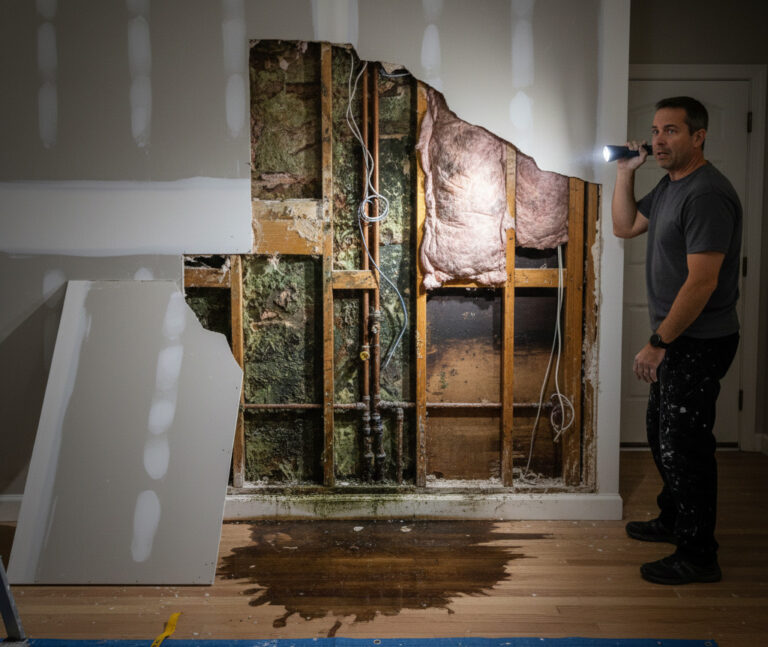
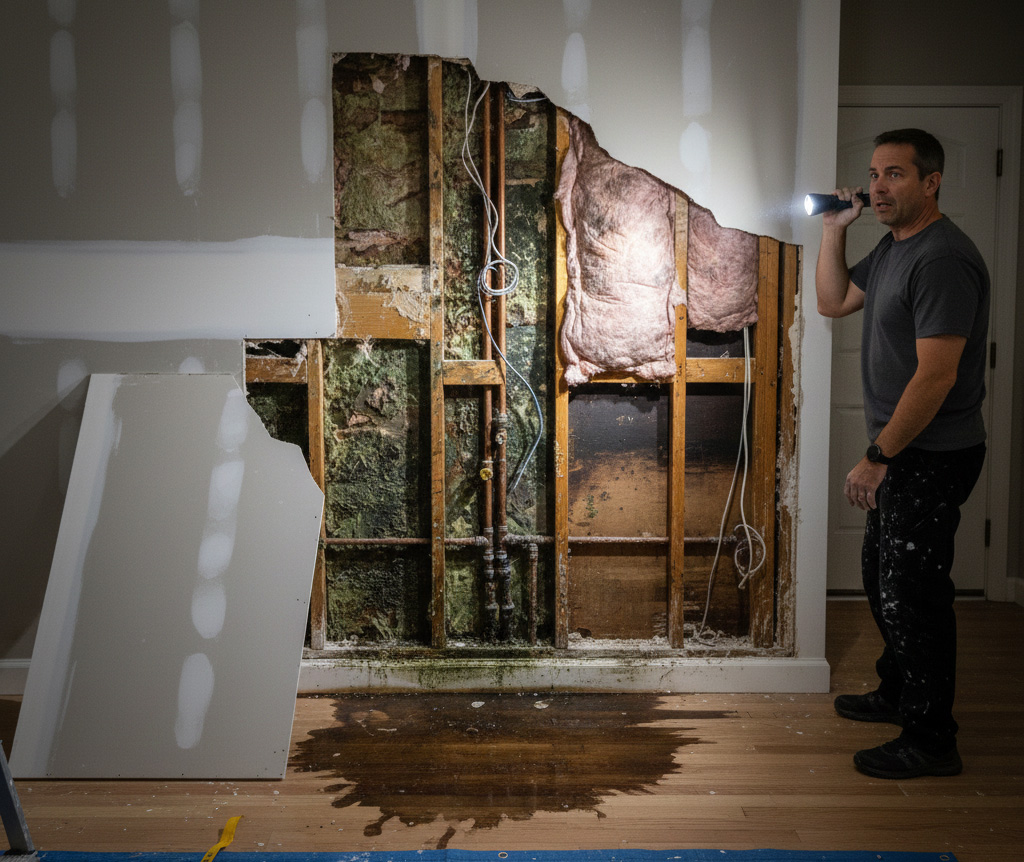
Mold growth on walls, trim, or corners
Cracked drywall seams caused by warped studs
Bulging or sagging drywall
Structural softness or wall bowing
These signs require immediate attention because mold can form within twenty-four to forty-eight hours.
How to Confirm Hidden Water Damage
If you suspect damage but do not see it yet, here are practical ways to confirm it without tearing the wall apart.
Moisture meter
A handheld moisture meter shows how much water is inside drywall. Anything above fifteen percent is a red flag.
Inspection hole
Cutting a small opening near the baseboard allows a direct look inside without major damage.
Outlet air test
Electrical outlets vent air from the wall cavity. A musty smell coming through an outlet strongly indicates moisture.
Thermal imaging
Professionals use thermal cameras to detect temperature differences that reveal hidden water pockets.
Where Water Damage Appears Most in Kelowna Homes
Certain areas in Kelowna homes are especially prone to moisture issues.
Behind shower walls
Below windows that face wind or heavy rain
Basements and foundation walls with older waterproofing
Laundry rooms with worn supply lines
Kitchen sink walls
Behind fridges with water dispensers
Ceilings below second-floor bathrooms
Mechanical rooms with condensation lines
Checking these hotspots regularly helps prevent bigger issues.
What To Do If You Discover Water Damage
Act quickly. Water spreads fast inside walls and insulation.
Step 1
Find the source and stop the leak. Shut off water if needed.
Step 2
Dry the area using fans, ventilation, and dehumidifiers.
Step 3
Remove damaged drywall. Wet drywall cannot be saved and must be cut out.
Step 4
Inspect studs and insulation. If they are wet, they must be dried or replaced before closing the wall.
Step 5
Repair the drywall with new boards, tape, mud, sanding, finishing, and repainting.
Step 6
Check for mold. If mold is present, remediation may be required before drywall is reinstalled.
When You Should Call a Professional
You can handle small moisture issues yourself, but call a drywall repair professional immediately if:
The wet area is larger than one square foot
There is mold odor or visible mold
The wall feels soft, bowed, or structurally affected
The moisture source is unclear
The damage keeps returning after rain
There are electrical components near the wet area
The leak involves a bathroom, kitchen, or top-floor plumbing
Water damage inside drywall spreads far faster than most homeowners realize. What looks like a small issue often hides a much larger problem in the wall cavity.
Why Professional Help Matters
A skilled drywall contractor will evaluate:
Moisture levels inside the wall
Condition of studs, insulation, and vapor barriers
Extent of mold growth
Hidden leaks from plumbing or appliances
Proper drying and restoration steps
How to prevent the issue from returning
Kelowna homes vary widely in age and construction style, so diagnosing the true source of water damage requires experience.
Protecting Your Kelowna Home From Future Water Damage
Prevention is always cheaper than repair. These steps reduce the risk significantly.
Replace aging plumbing supply lines
Keep gutters clear and downspouts extended
Inspect window seals yearly
Check basement walls after heavy rain
Install humidity control in basements and suites
Monitor bathrooms for loose caulking or grout gaps
Use moisture sensors in high-risk areas
Small maintenance habits stop most hidden leaks before they spread into the walls.
Final Thoughts
Water damage behind drywall is far more common in Kelowna than homeowners realize. The early signs are subtle, but catching them quickly can save you from costly structural repairs, mold issues, and rebuilding entire wall sections.
If you see any of the signs listed in this guide or suspect moisture inside your walls, getting a professional inspection is the safest move. Acting early protects your home and prevents a minor leak from turning into a major renovation.